Emergency numbers and medical information when you live abroad

In short
- 112 is the free emergency number everywhere in the EU, from mobile and fixed phones, alongside national numbers.
- Netherlands: 112, or 0900-8844 for non-urgent police. Belgium: 112 for an ambulance or the fire brigade, 101 for urgent police help.
- Write your medical information in simple English with key words in the local language, and copy medicine names from the label.
- An ICESCAN emergency page appears in Dutch, English or Spanish, depending on the language of the phone that scans it.
In the Netherlands, Belgium and Spain, as everywhere in the EU, you call 112 in an emergency. It is free from any mobile or fixed phone. That is the easy part. The harder part when you live abroad is making sure that the people who help you can tell who you are, what they need to know and who to call, in a language they understand.
This article covers the numbers worth saving for each country, why language matters more than you might expect, and how to carry your medical information so a local helper can use it.
Which emergency number do you call in the EU?
According to the European Commission, 112 is the European emergency number, available everywhere in the EU and free of charge. You can call it from fixed and mobile phones to reach any emergency service, and it works alongside existing national emergency numbers.
Two more points from the Commission are useful if your local language is still shaky. If you don't know where you are, the operator will identify where the call is coming from. And in many countries, operators can answer not only in the national language but also in English or French. "Many" isn't "all", so be ready to say where you are and what has happened as simply as you can.
Which numbers should you save in each country?
Netherlands. The Dutch health information site Thuisarts gives this order:
- In a life-threatening emergency, call 112. It is available 24 hours a day for ambulance, police and fire brigade.
- For other urgent medical problems during office hours, call your GP first. GP practices take calls on weekdays between 8 am and 5 pm.
- Outside those hours, call the out-of-hours GP service (huisartsen-spoedpost): weekdays from 5 pm to 8 am, and at weekends and on public holidays.
For police matters that aren't urgent, the Dutch police use 0900-8844; calls are charged per minute. Save your GP's number and that of your local out-of-hours service in your phone now, not when you need them.
Belgium. According to 112.be, you call 112 for an ambulance or the fire brigade, 101 for urgent police help and 1733 for the doctor on call. There is also the 112 BE app, in which you tap an icon for the service you need, so you don't have to remember which number is which.
Spain. 112 is your number for emergencies, as across the EU. Ask your local health centre (centro de salud) how urgent care outside office hours works in your area, since that is something to know before you need it.
Why language matters in an emergency abroad
You may get by perfectly well at the bakery or the town hall. In an emergency it's different: you may be in pain, confused or unable to speak at all, and the person helping you is most likely a passer-by speaking the local language. Paramedics may well speak English, but you can't count on the first person at your side doing so.
Medical details add a second layer. Brand names of medicines differ from country to country, so the name on your box from home may mean nothing to a Spanish or Belgian paramedic. And abbreviations that are obvious to you can be meaningless in another healthcare system.
How to carry medical information local helpers can read
- Write in short, simple English. Full words, no abbreviations: "type 1 diabetes, uses insulin pump" rather than a code.
- Add key words in the local language. Your main condition or allergy is enough, for example "allergisch voor penicilline" in Dutch or "alérgico a la penicilina" in Spanish, next to the English.
- Copy medicine names exactly from the label, add the active ingredient and the dose, and update the list when your local pharmacy switches you to a different brand.
- Give numbers in international format: +31, +32, +34, +44 and so on. A local helper can then dial them without working out the country code.
- Include at least one local contact, and note which languages each contact speaks: "Anna (friend, speaks Dutch and English)".
- Note your insurance. Many people who live abroad have a local policy and an international one; say which is which. If you are insured in an EU country, the European Health Insurance Card covers medically necessary, state-provided healthcare during a temporary stay in another EU country. The Commission is clear that it doesn't replace travel insurance.
A full checklist of what to include, and what to leave out, is in what emergency information to include.
Does your phone's Medical ID help abroad?
It helps, with a few catches. Medical ID on an iPhone and emergency information on Android can show your contacts and medical details on the lock screen, but only if you have switched that on. The menus appear in your phone's language, which may not be the helper's.
If you have moved from the US or Canada, note that Apple says automatic sharing of your Medical ID during an emergency call only works in those two countries. On Android, Google's Emergency Location Service can send your location during an emergency call if it works in your country and on your network. Either way, don't assume the control room in your new country receives your medical details. The steps are in how to set up Medical ID on iPhone and Android.
A wearable that shows Dutch, English or Spanish
Something you wear works without your phone. With an ICESCAN, whoever helps you scans the bracelet or key ring with their own phone. The emergency page opens in their browser with the details you have filled in, and they can call your contacts with one tap. No app is needed, but their phone does need internet.
The fixed parts of the emergency page appear in Dutch, English or Spanish, depending on the language of the phone that scans it. A passer-by in Utrecht with a Dutch phone sees Dutch headings; one in Málaga with a Spanish phone sees Spanish ones. What you typed yourself appears exactly as you wrote it, which is why the local key words above are worth adding.
You can choose, among others, a bracelet in 19 cm or 16 cm or a key ring. Delivery is free to the Netherlands, Belgium and Spain (mainland and the Balearic Islands).
A checklist for your first weeks in a new country
- Save 112 and the local numbers above in your phone.
- Register with a GP or find your local health centre.
- Set up Medical ID or emergency information, with numbers in international format.
- Write your medical information in simple English, with key words in the local language.
- Ask a local friend or colleague to be one of your ICE contacts.
- Carry your emergency information on you, not only on your phone.
Frequently asked questions
Does 112 work from a mobile phone in every EU country?
The European Commission says 112 is available everywhere in the EU, free of charge, from fixed and mobile phones. It works alongside national numbers, such as 101 for urgent police help in Belgium. Save the local non-emergency numbers too, such as the doctor on call, because 112 is meant for emergencies.
Will the 112 operator speak English?
In many countries operators can answer in English or French as well as the national language, according to the European Commission. It isn't guaranteed everywhere. Stay calm, say "English, please" if needed, and start with where you are. If you don't know, the operator can identify where the call is coming from.
Which language should my emergency information be in?
Mainly in simple English, which many helpers can follow or put into a translation app, with your main condition or allergy repeated in the local language. On an ICESCAN the headings follow the scanner's phone language (Dutch, English or Spanish), while your own text stays as you typed it.
Do I need to change anything when I move from the Netherlands to Spain, or the other way round?
Update your local contacts, your GP or health centre, your insurance details and the local-language key words. Check your medicine names too, because your new pharmacy may supply a different brand. You can change everything on an ICESCAN yourself through My ICESCAN; the tag itself stays the same.
Goes with this article
All ICESCANs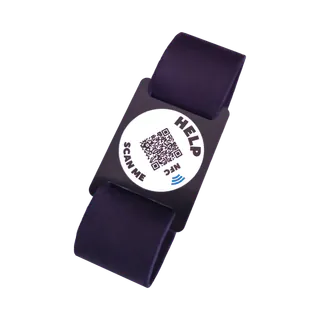
Bracelet, 19 cm
Adults · black
Now €29.95
Regular price €34.95-
Bracelet, 16 cm
Adults · black
Now €29.95
Regular price €34.95 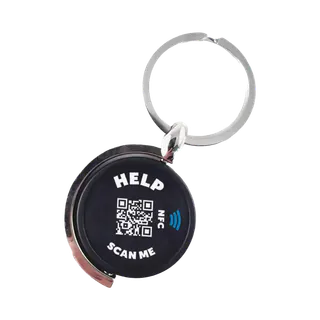
Key ring
For your keys
Now €29.95
Regular price €34.95Temporarily out of stock


