
Pet ID tag with a QR code or a microchip? Why your dog or cat is better off with both

In short
- A microchip can only be read with a scanner; a tag on the collar lets anyone who finds your pet call you straight away.
- Dogs must be microchipped in the Netherlands, Belgium and Spain; in Spain the rule also covers cats and ferrets.
- Check that your details in the chip database are up to date, especially after moving house or country.
- A QR pet tag shows your number and notes, but it isn't a GPS tracker: you hear nothing until the finder calls.
A microchip is your pet's permanent ID, but it can only be read with a scanner, which vets, shelters and animal services have and the person who finds your dog on a walk doesn't. A pet ID tag with a QR code fills that gap: anyone with a smartphone can scan it and call you. That's why your dog or cat is best off with both.
Below you'll find the differences side by side, the microchip rules in the Netherlands, Belgium and Spain, what a QR tag can and can't do, and what to do in the first hours if your pet goes missing.
Microchip vs ID tag: what's the difference?
| Microchip | Engraved tag | Tag with QR code and NFC | |
|---|---|---|---|
| Where is it? | under the skin | on the collar | on the collar |
| Who can read it? | anyone with a chip scanner | anyone | anyone with a smartphone |
| What does the finder get? | a chip number to look up in a database | the details engraved on it | a web page with your contacts and notes |
| Can you update it? | yes, in the database | no, you need a new tag | yes, yourself, at any time |
| Can it get lost? | no | yes, with the collar | yes, with the collar |
| Required by law? | for dogs in the Netherlands, Belgium and Spain | no | no |
The chip and the tag do different jobs. The chip proves whose animal it is, even without a collar. The tag makes sure a finder can reach you without first driving to a vet.
What are the microchip rules in the Netherlands, Belgium and Spain?
Netherlands. According to the Dutch government, your dog must be microchipped and registered no later than 7 weeks after birth, by a vet or a professional microchipper. You may not implant a chip yourself. If you bring a dog with you when you move to the Netherlands, you must register it within 2 weeks of arrival.
Belgium. Identifying and registering dogs has been compulsory since 1 September 1998, using the national DogID database. Cats are registered in a separate database, CatID.
Spain. Under the 2023 animal welfare law (Ley 7/2023, article 51), dogs, cats and ferrets must be identified with a microchip.
Travelling within the EU. For dogs, cats and ferrets, the EU pet passport is mandatory for travel between EU countries. Your pet must be microchipped before its rabies vaccination, or the vaccination doesn't count.
If you have moved country with your pet, ask your vet whether the chip number is registered in a database in your new country, and check that your phone number there is current. A chip linked to an old number helps nobody.
Why a tag on the collar helps alongside the chip
A finder who sees a tag can act at once. A classic engraved tag with your phone number already does that. A tag with an NFC chip and a QR code does a little more.
With the ICESCAN pet ID tag, the finder holds a phone against the tag or scans the QR code with the camera. A page opens in the browser with the details you have filled in, and the finder can call or email you with one tap. No app is needed, and the QR code works on almost any smartphone.
What that adds in practice:
- Several contacts. You can add up to five. If you don't answer, the finder calls your partner or neighbour.
- Notes. You decide what the finder should know, such as medication your dog takes or that it is nervous around other dogs.
- Always current. New phone number after a move? You change it yourself, without ordering a new engraving.
- No battery and no subscription. The tag is waterproof, light and needs no power.
- A language the finder understands. The fixed text on the page appears in Dutch, English or Spanish, depending on the language of the finder's phone. Your own notes appear as you typed them, so if you live in Spain or the Netherlands, a few words in the local language can help.
To be clear about what it doesn't do: the tag isn't a GPS tracker, and you get no notification or location when someone scans it. It works because the finder calls you, and the finder needs internet to see your details. It doesn't replace the microchip either. For a pet you use the same kind of profile as for a person: you add yourself as the contact and put information about your animal under the other details.
Lost your dog or cat? What to do in the first hours
Start close by: the sooner you search, the smaller the area your pet can be in.
- Stay calm and go back to where you lost it. Your dog may be looking for you there too. If possible, leave someone there, or a coat that smells of you.
- Call, then listen. A frightened dog won't always come, but it may make a sound.
- Get help. Ask housemates, neighbours or friends to cover different areas, and have someone stay at home in case your pet comes back.
- Ask people you meet. Walkers, cyclists and people in their gardens may have seen something. Show a photo and give your number.
- Keep your phone with you. If your pet wears a tag, a finder can call at any moment.
If you don't find it quickly, report it in several places. Call local shelters and vets, since a found animal is often taken there to have its chip read. Let the database where the chip is registered know, and share a clear photo in local groups online, including expat groups. In the Netherlands, Amivedi is the national reporting point for lost and found pets: registering is free, and its volunteers work with the police, vets, animal ambulances and shelters.
Cats often hide nearby in sheds, garages and bushes. If you have just moved, check around your old address as well.
How to stop your pet running off
- Check regularly that gates and fences are closed.
- Keep your dog on a lead in unfamiliar areas, where there is wildlife, or if it doesn't come back reliably yet.
- Keep pets indoors or on a lead during fireworks, such as at New Year or local festivals.
- Check the collar fits: you should be able to slide two fingers underneath, but it mustn't slip over the head.
- Keep a few recent, clear photos of your pet from the front and the side. If it goes missing, you need them straight away.
Frequently asked questions
What should I do if I find a dog?
First see whether the dog wears a tag. If there is a phone number on it, or you can scan it, call the owner. If there's nothing, take the dog to a vet or shelter nearby to have the chip read, or contact the local animal service. In the Netherlands you can also report it as found to Amivedi.
Can I put the ICESCAN tag on my cat's collar?
Yes, the pet tag is suitable for dogs and cats and is light. For cats, choose a collar with a safety release that opens if your cat gets caught on something. The tag is waterproof and works without a battery.
What if the tag itself gets lost?
The tag holds no data, only a link with a unique code. If it gets lost, forward the activation email you received when you linked it to ICESCAN, and the tag will be unlinked from your details. So keep that email somewhere safe. See also the FAQ on losing an ICESCAN.
Goes with this article
All ICESCANs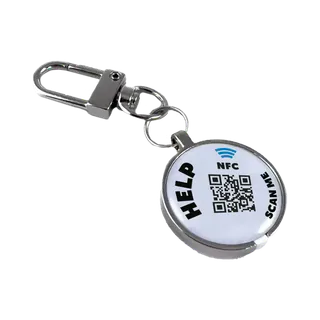
Pet ID tag
For dogs and cats
Now €29.95
Regular price €34.95


