Allergy bracelet: how strangers know what to do in anaphylaxis

In short
- During anaphylaxis you may not be able to say what is wrong, so the people around you need to be able to see it.
- In a severe reaction, use the adrenaline auto-injector and call the emergency number straight away: 112 in the EU, 999 in the UK.
- Put your allergy, where you keep your auto-injector and your emergency contacts where anyone can see them on your profile.
- Show the people around you how your auto-injector works. An allergy bracelet doesn't replace that.
An allergy bracelet is meant for the moment you can no longer speak for yourself. A severe allergic reaction (anaphylaxis) can develop fast: your throat swells, you feel dizzy or you struggle to breathe. Whoever is next to you then needs to see, without an explanation, what you are allergic to, that you carry an adrenaline auto-injector and who to call.
The basics stay the same: carry your auto-injectors, make sure the people around you know how to use them, and always call the emergency number. The NHS also advises people at risk to wear medical alert jewellery, such as a bracelet that states the allergy. Below you'll read how to recognise anaphylaxis, what a bystander should do and what to put on your emergency profile.
What is anaphylaxis and how do you recognise it?
The NHS describes anaphylaxis as a life-threatening allergic reaction that happens very quickly. Call the emergency number if someone:
- suddenly has swollen lips, mouth, throat or tongue;
- is breathing very fast or struggling to breathe, perhaps wheezing or gasping;
- has a tight throat or is struggling to swallow;
- has skin, tongue or lips that turn blue, grey or pale;
- suddenly becomes very confused, drowsy or dizzy;
- faints and cannot be woken up;
- is a child who is limp, floppy or not responding as they normally would.
There may also be a swollen, raised or itchy rash. Common triggers listed by the NHS include foods such as nuts, cows' milk, eggs, fish and sesame, some medicines, wasp and bee stings, anaesthetics and latex. Sometimes the cause isn't known.
What should a bystander do during anaphylaxis?
The NHS gives these steps:
- Use an adrenaline auto-injector (such as an EpiPen) if the person has one. The instructions are on the side of the injector.
- Call an ambulance and say you think it is an anaphylactic reaction. In the Netherlands, Belgium, Spain and the rest of the EU the number is 112; in the UK it is 999.
- Help the person lie down. They can raise their legs, or raise their shoulders or sit up slowly if breathing is hard. A pregnant woman should lie on her left side.
- After an insect sting, try to remove the sting if it is still in the skin.
- If symptoms have not improved after 5 minutes, use a second auto-injector.
The person should not stand or walk, even if they feel better. This is also why the NHS advises carrying two auto-injectors at all times. Always follow the instructions your own doctor has given you.
Why an allergy bracelet helps
In the first minute, a bystander doesn't know three things: what is wrong with you, whether you have an auto-injector and who to call. Your phone can tell them if you have set up Medical ID, but only if they know where to look and your phone is intact and charged.
Something on your wrist gets noticed straight away. An ICESCAN bracelet carries the words HELP and SCAN ME, with a QR code and an NFC chip. Whoever helps you holds a phone against the bracelet or scans the QR code with the camera. Your emergency page opens in the browser, with the details you have filled in and buttons to call your contacts with one tap. No app is needed, but the phone that scans does need an internet connection.
The bracelet is waterproof and has no battery, so you can keep it on in the shower, in the pool and on holiday. The fixed parts of the emergency page appear in Dutch, English or Spanish, depending on the language of the phone that scans it, which helps if the waiter who comes to your aid in Valencia or Antwerp has a Spanish or Dutch phone. It comes in 19 cm and 16 cm.
What should you put on your profile if you have a severe allergy?
Write as if the reader knows nothing about allergies and has very little time. A good layout:
- Your allergy, as precisely as possible. Not "nuts" but "peanuts and cashews, including traces".
- Where your auto-injectors are. For example: "Two adrenaline pens in the front pocket of my rucksack."
- A short instruction. "Severe reaction: use my adrenaline pen (instructions on the side), then call 112."
- Other conditions, such as asthma, and the medication you take.
- Your allergy specialist or GP.
- Up to five emergency contacts, with the person to call first at the top.
You can protect sensitive sections with a password (see who can see your details). Keep your allergy and the location of your pens visible, though: that is what a bystander can act on immediately. The emergency information checklist helps you weigh up the rest.
What you type yourself appears exactly as you wrote it. If you live in the Netherlands, Belgium or Spain, consider adding your main allergy in the local language as well, for example "pinda-allergie" in Dutch or "alergia al cacahuete" in Spanish, next to the English.
Eating out with a severe allergy in Europe
Across the EU, restaurants and cafés have to tell you about allergens. According to the European Commission, 14 allergens must be clearly indicated when they are used as ingredients: cereals containing gluten, crustaceans, eggs, fish, peanuts, soybeans, milk, tree nuts, celery, mustard, sesame seeds, sulphites above a set level, lupin and molluscs.
For food that isn't prepacked, such as a dish in a restaurant, this information may be given verbally. There must then be clear indications of how you can get it, and it must be available in writing on request.
So always ask, even about a dish you have had before; recipes change. If your Dutch or Spanish is shaky, a short allergy card in the local language saves a lot of pointing at the menu. And tell the people you are eating with where your pens are. They are the ones who will have to act first.
A child with a severe allergy
If your child has a severe allergy, you'll tell family, teachers and the parents of friends what to do. But children also spend time where nobody knows them: a sports club, a school trip, a holiday club or a theme park abroad.
A children's bracelet with emergency information is elastic and stays on, so a supervisor or another parent can scan it and call you. It is recommended for children up to 7. How to teach a child to ask for help is covered in ID bracelets for children.
Frequently asked questions
Does everyone with a food allergy need an adrenaline auto-injector?
That is for your doctor to decide. Whether you are prescribed one depends on your risk of a severe reaction, and that differs from person to person. Discuss it with your GP or allergy specialist, and if you have moved country, ask your new GP to review your prescription so you know which brand you will be given locally.
How often should I check my auto-injector?
The NHS advises checking expiry dates regularly and not storing auto-injectors anywhere too hot or too cold. Check your emergency profile at the same time: is the description of where your pens are still right, and are your contacts and medication up to date? If you have used a pen, get a new one from your doctor and update your profile if anything has changed.
Do I need a bracelet if I always carry my pen?
The pen is the medicine; the bracelet tells others that you have it and where it is. People who don't know you won't go through your bag on their own initiative. That is why the two work best together. If you would rather not wear a bracelet, a key ring on your keys or a brooch on your coat is also somewhere people look.
Does this work for an allergy to insect stings or medicines?
Yes. The emergency profile isn't limited to food. You fill in what you are allergic to yourself, whether that is wasps, an antibiotic or latex. Add what you carry with you and what a paramedic needs to know, such as a medicine you must not be given. You can change your profile whenever you want.
Goes with this article
All ICESCANs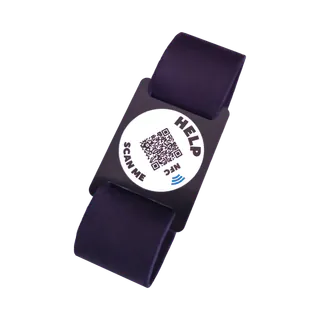
Bracelet, 19 cm
Adults · black
Now €29.95
Regular price €34.95-
Bracelet, 16 cm
Adults · black
Now €29.95
Regular price €34.95 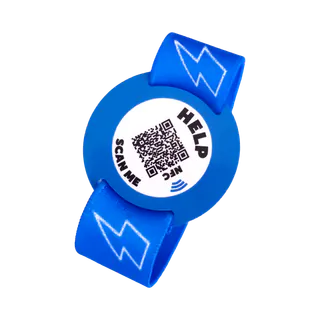
Kids' bracelet, blue
For children · stretchy
Now €29.95
Regular price €34.95


