Medical ID with diabetes: what a stranger needs to know during a hypo

In short
- A hypo can make you confused or drowsy, so the people around you need to see that you have diabetes without you having to explain it.
- The NHS advises people with diabetes to carry medical ID, alongside their hypo treatment and, if prescribed, a glucagon kit.
- Fill in your type of diabetes, your medication, any pump or sensor, what helps you during a hypo and who to call.
- Never give food or drink to someone who is unconscious: recovery position, glucagon if available, and call 112 (999 in the UK).
A diabetes medical ID tells the people around you three things when you can't: that you have diabetes, what helps you during a hypo and who they should call. That matters because a low blood sugar can make you shaky, confused or drowsy, and someone who doesn't know you may not realise what is going on. The NHS advises people with diabetes to carry medical ID with them, together with a glucagon kit if they have been prescribed one.
Below you'll read how to recognise a hypo, what a bystander can do and what to put on your emergency profile if you have type 1 or type 2 diabetes. This is general first aid information; your diabetes team's advice always comes first.
Who needs a medical ID with diabetes?
Anyone who can have a hypo benefits from one. Diabetes UK explains that insulin and certain other diabetes medicines make a hypo more likely, and that not everyone with diabetes gets them. So it applies to most people with type 1, and to people with type 2 who use insulin or a medicine that can lower blood sugar too far. Not sure whether that includes you? Ask your GP or diabetes nurse.
Even if hypos are rare for you, a medical ID helps in other situations: after an accident, in hospital, or when a paramedic needs to know which medicines you take.
How do you recognise a hypo?
According to the NHS, low blood sugar is usually below 4 mmol/L. Early signs include:
- hunger, sweating, shaking or tingling lips;
- dizziness, tiredness or weakness;
- a racing or pounding heart;
- blurred vision;
- anxiety, irritability or confusion.
Diabetes UK adds paleness, tearfulness, headache and poor concentration. If a hypo isn't treated, it can lead to a seizure or loss of consciousness. Some people have little or no warning at all, which Diabetes UK calls hypo unawareness. For them in particular, it helps if others can see straight away that diabetes is involved.
Signs such as confusion or odd behaviour can easily be mistaken for something else by people who don't know you. A bracelet that says HELP and SCAN ME gives them a starting point.
What can a bystander do during a hypo?
The NHS describes these steps. If the person is awake and can swallow:
- Give something fast-acting with sugar: a small glass of fruit juice or a non-diet fizzy drink, glucose tablets, or glucose gel.
- Recheck the blood sugar after 10 to 15 minutes, if the person can. Still under 4 mmol/L? Give sugar again.
- Once it is back above 4 mmol/L, follow with something more filling, such as biscuits, a sandwich or the next meal.
The British Red Cross adds that if you're unsure, giving a conscious person something sweet is unlikely to do harm.
If the person is unconscious or not responding normally:
- Give nothing by mouth; they may choke.
- Put them in the recovery position.
- Give a glucagon injection if one is available and you know how to use it.
- Call an ambulance if there is no glucagon or you don't know how to give it, if they haven't recovered within 10 minutes of the injection, or if they have been drinking alcohol.
The emergency number is 112 in the Netherlands, Belgium, Spain and the rest of the EU, and 999 in the UK. Stay with the person until they have fully recovered.
What should you put on your emergency profile?
Write for someone who knows nothing about diabetes and has very little time. Short sentences, the most important information first.
- Your type of diabetes. "Type 1 diabetes, insulin-dependent" says more than "diabetes".
- What a hypo looks like for you. For example: "During a hypo I get confused and pale and sometimes don't respond."
- What helps. "Awake: give me sugar, such as juice or the glucose tablets in my left jacket pocket. Unconscious: nothing by mouth, recovery position, call 112."
- Where your hypo treatment and glucagon are. Be specific: "Glucose tablets and a glucagon kit in the side pocket of my bag."
- Your medication, with the name and dose, including any other medicines you take.
- Devices. Do you wear an insulin pump or a glucose sensor? Say so, and where it sits on your body. Then a paramedic knows what that device is.
- Your diabetes team or GP, with a phone number.
- Your emergency contacts. You can add up to five, with the person who knows most about your diabetes at the top.
In the ICESCAN profile you'll find sections for conditions, medication, allergies, treatments and special devices, so each item has its own place. The emergency information checklist helps with the rest.
Would you rather keep some details private? You can protect sensitive sections with a password (see who can see your details). Keep your type of diabetes, what helps during a hypo and your contacts visible, though: that is what a bystander can act on.
Bracelet, key ring or phone?
Your phone can show a Medical ID on the lock screen, and it is worth setting that up. But a bystander has to know where to look, and your phone has to be within reach, intact and charged.
An ICESCAN bracelet is on your wrist, where people look first. Whoever helps you holds their phone against it (NFC) or scans the QR code with the camera. Your emergency page opens in the browser, with buttons to call your contacts with one tap. No app needed, but the phone that scans does need internet. The fixed parts of the emergency page appear in Dutch, English or Spanish, depending on the language of that phone.
The bracelet has no battery and comes in 19 cm and 16 cm. Don't like wearing something on your wrist? A key ring on your keys is an alternative, although it is less obvious than a bracelet. There's no subscription; you pay once. Have a look in the shop.
A child with type 1 diabetes
Children with type 1 spend a lot of time where a parent isn't around: at school, at a sports club, on a school trip. Teachers and coaches usually know what to do, but a substitute or another parent may not. A children's bracelet with your child's emergency information lets them see what's going on and call you straight away. Write the profile in plain words, and agree with the school who checks their blood sugar and where the hypo treatment is kept.
Frequently asked questions
Do I need to add my blood glucose targets?
That isn't necessary for a bystander. A paramedic will measure your blood sugar. What does help is how a hypo shows in you and what helps you. If you like, add a line such as "Hypo treatment: glucose tablets", with the amount your diabetes team advised.
My sensor sends alerts to my partner. Do I still need an ID?
An alert reaches your partner, but not the stranger standing next to you. Your ID helps that person, and with one tap they can call your partner. The two complement each other.
What if I live in the Netherlands, Belgium or Spain and don't speak the language well?
The fixed parts of the emergency page follow the language of the phone that scans. Anything you type yourself appears exactly as you wrote it. Consider adding the key line in the local language too, such as "diabetes type 1, insuline" in Dutch or "diabetes tipo 1, insulina" in Spanish. The emergency number is 112 everywhere in the EU.
How often should I update my profile?
Whenever your medication, dose or device changes, and otherwise once or twice a year. You can update your details yourself at any time with a login code sent to your email.
Goes with this article
All ICESCANs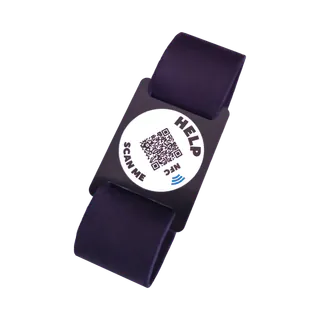
Bracelet, 19 cm
Adults · black
Now €29.95
Regular price €34.95-
Bracelet, 16 cm
Adults · black
Now €29.95
Regular price €34.95 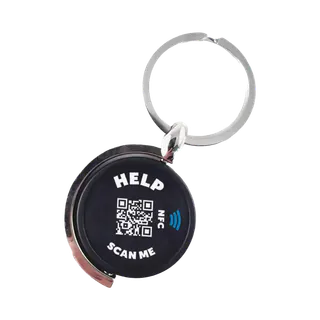
Key ring
For your keys
Now €29.95
Regular price €34.95Temporarily out of stock


