
Epilepsy and emergency information: what bystanders need to know during a seizure

In short
- During a seizure, the basics are: stay calm, cushion the head, time the seizure and stay with the person.
- Never hold someone down and never put anything in their mouth.
- Call 112 (999 in the UK) for a first seizure, an injury, breathing problems, a seizure that lasts longer than usual or more than 5 minutes, or one seizure after another.
- Put on your profile what your seizures look like, how long they usually last, when an ambulance is needed and who to call.
If someone has a seizure, a bystander mainly needs to do three things: keep the person safe, time the seizure and know when to call an ambulance. Most seizures stop on their own. The hard part is that a stranger doesn't know whether this seizure is "normal" for you or whether help is needed. Your emergency information can answer exactly that question.
The NHS advises people with epilepsy to carry medical ID, such as a bracelet or a card that lets people know they have epilepsy. Below you'll read what bystanders should do, when to call 112 and what to put on your profile. This is general first aid information; the care plan from your own neurologist or epilepsy nurse always comes first.
What should you do when someone has a seizure?
Epilepsy Action sums up first aid for a tonic-clonic seizure (the person goes stiff, falls and jerks) in four letters: CARE.
- Comfort. Cushion their head with something soft, such as a rolled-up coat, to protect them from injury.
- Action. Note the time the seizure starts and clear the area of anything that could hurt them. Check whether the person has a medical ID or bracelet with information on how to help.
- Reassure. When the shaking stops, put them in the recovery position, stay with them and talk calmly as they come round.
- Emergency. Call an ambulance if needed (see below).
The Epilepsy Society adds what you should not do:
- don't hold the person down;
- don't put anything in their mouth; they won't swallow their tongue;
- don't let people crowd around them;
- don't give food or drink until they have fully recovered.
Only move someone if they are in danger, for example near a road or water. Afterwards, many people are tired or confused. Stay with them until they know where they are.
What about a seizure where someone stays on their feet?
Not every seizure involves falling and jerking. In a focal seizure, someone may seem absent, pluck at their clothes, smack their lips or wander around without being aware of their surroundings. According to the Epilepsy Society, you shouldn't restrain them, as this may upset or confuse them. Gently guide them away from danger, speak calmly and stay with them until they have recovered.
For a stranger, this kind of seizure is particularly hard to place. It can look like someone who is confused or unwell, or as if something else is going on. A line on your profile such as "I sometimes have seizures where I wander around and don't respond; I come round after a few minutes" saves a lot of guessing.
When should you call 112?
Most people with epilepsy don't need an ambulance after a seizure. The NHS and the epilepsy charities name these situations in which you should call:
- it is the person's first seizure, or you don't know whether they have epilepsy;
- the seizure lasts longer than is usual for them, or longer than 5 minutes if you don't know how long their seizures usually last;
- one seizure follows another without the person recovering in between;
- the person has trouble breathing after the seizure;
- the person is injured;
- they don't recover as usual afterwards;
- they have had 3 or more seizures in 24 hours.
A seizure that lasts too long, or seizures that follow one another without recovery, is called status epilepticus. That is a medical emergency.
The number is 112 in the Netherlands, Belgium, Spain and the rest of the EU, and 999 in the UK. A bystander who doesn't know you can't tell how long your seizures usually last. If that's on your emergency page, they can make a better decision, and often they can call someone close to you as well.
What should you put on your emergency profile with epilepsy?
Write for someone who has never seen a seizure and is a bit shaken. Short, concrete and in the right order:
- That you have epilepsy, and what your seizures look like. "Tonic-clonic seizures: I fall, go stiff and jerk" or "focal seizures: I stare and fiddle with my clothes".
- How long a seizure usually lasts, and how long recovery takes. For example: "Usually 1 to 2 minutes, then I'm drowsy for about half an hour."
- When an ambulance is needed for you. Use what your neurologist has agreed with you. For example: "Call 112 if it lasts longer than 5 minutes, if I'm injured or if a second seizure follows."
- Emergency medicine. Some people are prescribed medicine to stop a seizure that lasts too long. Say whether you have it with you, where it is, and that only someone who has been trained to use it should give it.
- Your medication, with names and doses.
- What helps afterwards. "Let me sleep; I'm confused for a while but don't need help getting home if someone calls my partner."
- Your neurologist or epilepsy nurse, with a phone number.
- Your emergency contacts: up to five, with the person who knows your seizures best at the top.
In the ICESCAN profile, conditions, medication and treatments each have their own section, and you decide what is visible. You can protect sensitive sections with a password (see who can see your details). Keep the first-aid lines and your contacts visible, because that's what a bystander can act on. For the rest, see the emergency information checklist.
How does an ICESCAN ID help during a seizure?
The Epilepsy Society advises bystanders to look for medical jewellery or an ID card for information about what to do. An ICESCAN bracelet carries the words HELP and SCAN ME, with an NFC chip and a QR code. Whoever helps you holds their phone against it or scans the code with the camera. Your emergency page opens in the browser, with your information and buttons to call your contacts with one tap.
A few practical points:
- No app needed, but the phone that scans does need internet.
- The fixed parts of the page appear in Dutch, English or Spanish, depending on the language of the scanning phone. Anything you type yourself appears as you wrote it.
- No battery and no subscription. The bracelet comes in 19 cm and 16 cm.
If you'd rather not wear a bracelet, a brooch on your coat or bag is an alternative. Your phone's Medical ID is worth setting up too, as an extra layer. You'll find all products in the shop.
Frequently asked questions
Should I tell colleagues or classmates what to do?
That's up to you, but it helps. The people you see every day are most likely to be there when you have a seizure. Explain how your seizures usually go and when an ambulance is needed. Your emergency information is for the moments when none of those people are around.
My child has epilepsy. What should I put on their profile?
The same points, written for a teacher, coach or another parent: what a seizure looks like, how long it usually lasts, when to call 112 and who to call first. Agree the details with the school and use the care plan from your child's neurologist. For younger children there are children's bracelets that are elastic and stay on.
Can someone see my information without scanning?
Whoever has the code or the link to your emergency page can view the public part. That's why you choose for yourself what is public and what sits behind a password. You can change that at any time.
How often should I update my profile?
Whenever your medication, your seizures or your agreements with your neurologist change, and otherwise once or twice a year. You can update your details yourself at any time with a login code sent to your email.
Goes with this article
All ICESCANs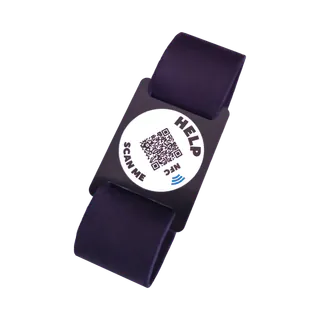
Bracelet, 19 cm
Adults · black
Now €29.95
Regular price €34.95-
Bracelet, 16 cm
Adults · black
Now €29.95
Regular price €34.95 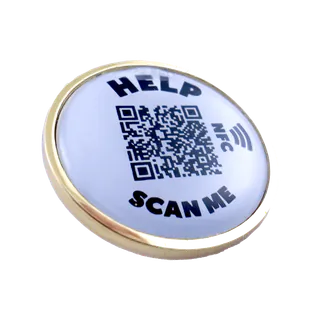
Brooch
Gold-coloured · for your coat
Now €29.95
Regular price €34.95


